
Focus on Kubora
The opening story
A man once bought a beautiful fruit from the market. Its color was bright, its shape flawless, and its fragrance inviting. But the moment he cut it open, he found it rotten from the inside. What appeared perfect externally was internally corrupted. This is not just the story of a fruit. It is the story of our world.
focus on kubora: Introduction: A World That Looks Alive but Is Decaying.
Across nations, systems, and generations, humanity celebrates progress, technology, medicine, education, and innovation. Yet beneath this advancement lies a troubling reality: increasing confusion, moral decline, addiction, broken identities, and systemic injustice. This contradiction raises a critical question: Is the world truly progressing, or is it decaying beneath a polished surface? This article explores the world as a system of corruption, a place where original design has been altered, spoiled, and distorted. Drawing from science, professional insight, and scripture, we uncover both the problem and the path to restoration.

Focus on Kubora: The scientific view of corruption
The world has understood the principle of corruption in different areas, but missed the true concept of it, which is why a man has those principles. In science, corruption can be understood through concepts like: Entropy in Physics: The natural tendency of systems to move from order to disorder, Mutation in Biology: Alteration of original genetic information, sometimes leading to disease, and Decomposition in Chemistry: The breakdown of organic matter into simpler, often useless forms. Professionals across fields agree on one pattern: corruption is the loss of original structure, function, or purpose. A corrupted system may still exist, but it no longer functions as it was designed.

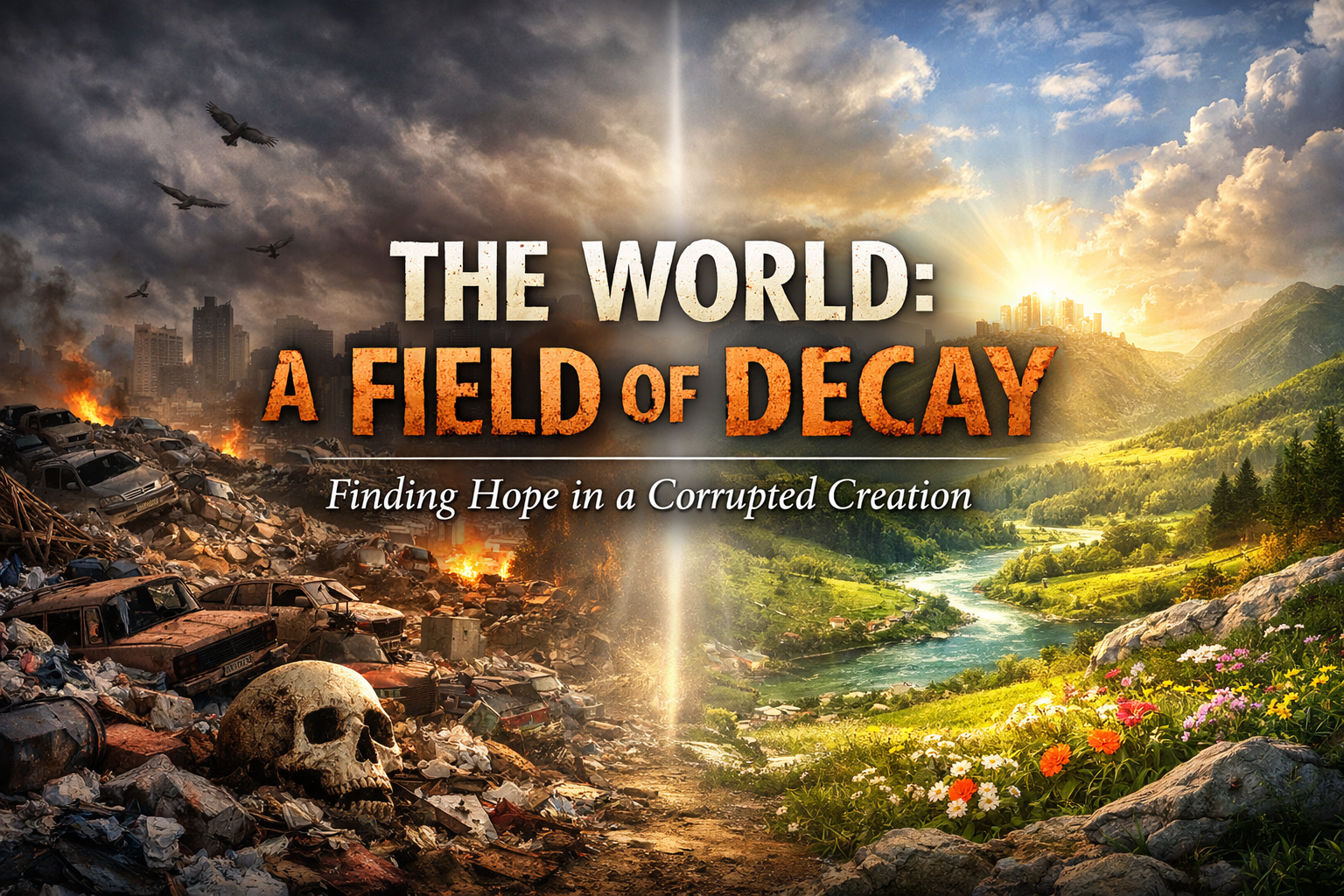
Focus on Kubora: The World as a “Field of Decay”
A few days ago, I was reading a book, where, The Indian historian P.R. Sarkar proposes that historical events follow a pattern. The last stage is my concern; he named it “the age of chaos.”
What is the age of chaos?
Age of Chaos: is the stage where Government “corruption” reaches such a degree that they are unable to rule effectively. There is a breakdown of law and order. Crime is rampant, women’s status is at its lowest point, and because of disease, warfare, and natural disasters, the population declines rapidly. Wealth is in the hands of criminals.
The Age of Chaos also has elements of the previous three ages, but in a degraded and devolutionary form. Instead of noble warriors, you have street gangs and police thugs. Instead of intellectual honesty and the quest for new ideas, you have orthodoxy, political correctness, and thought crime. Instead of a free and open market, you have a rigged market, monopolies, and organized crime.” This stage is the true field of corruption, the valley of corruption, or the field of decay.
Focus on Kubora: The expert observations
The expert observations in today’s world, psychologists report rising anxiety, depression, and identity crises, medical professionals observe increasing chronic diseases and addiction patterns, and sociologists identify breakdowns in family structures and social trust, even though they use different languages, many experts describe the same phenomenon “something fundamental in humanity is not functioning correctly”.
Focus on Kubora: The world’s experiences.
I was recently watching the news and following discussions on social media, where a journalist was analyzing a United Nations Security Council meeting held a few days ago. Many countries appeared to stand against Iran. However, when one looks deeper into the origins of the conflict, the situation seems more complex, with different perspectives on who initiated the escalation.
From a logical point of view, it raises an important question about global leadership and responsibility. Rather than certain nations positioning themselves as dominant leaders of the world, perhaps there is a greater need for balance, accountability, and mutual respect among all countries.
In the same context, I have also observed claims and counterclaims surrounding the human cost of the conflict, particularly concerning the loss of innocent lives, including children. Each side accuses the other, and the world is left trying to discern truth amid grief, anger, and competing narratives.
What becomes deeply troubling is not only the loss itself, but the pattern it reveals. When harm is inflicted on others, yet the same harm is condemned when it returns, it exposes a painful contradiction in human behavior. It raises a difficult but necessary question: how can suffering be justified in one moment and denounced in another?
This tension points to something deeper than politics or war. It suggests that the world may be experiencing a form of moral and spiritual disorder, an illness that is not always recognized as such. When actions are driven by pride, self-interest, and the desire to dominate, the result is often a cycle of pain that continues to reproduce itself.
At the root of this cycle are the very elements that define corruption: the loss of truth, the distortion of justice, and the elevation of self above others. These forces do not only affect individuals, but they also shape systems, decisions, and global outcomes.
Focus on Kubora: The ancient archives report of corruption
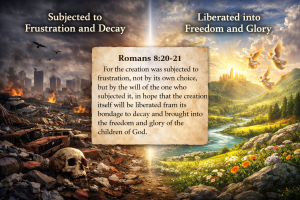
The ancient archives recorded this truth: “For the creation was subjected to frustration, not by its own choice, but by the will of the one who subjected it, in hope, that the creation itself will be liberated from its bondage to decay and brought into the freedom and glory of the children of God. The kingdom library, the section of explanation, the range of Romans, line 8, verses 20-21.
Focus on Kubora: The ignorance of the world
The truth is, the world is under health. A man doesn’t understand the root of what is happening in this world. If a man applies this understanding globally, he begins to see the world not just as a physical place, but as a field of decay, where systems designed for justice produce injustice, tools created for connection produce isolation, substances meant for use become sources of addiction, and identity becomes confused and fragmented. This is not accidental. It is the consistent pattern of corruption.
Focus on Kubora: Conclusion
A machine without its original blueprint cannot be properly repaired; likewise, humanity without understanding its original design cannot restore itself. In fact, Corruption thrives where truth is lost. The world, as it currently operates, reflects a system affected by corruption. But it is not the final design. Just as the rotten fruit still carries the memory of its original form, humanity still carries the imprint of its original design. The question is no longer whether corruption exists. The question is: Will we continue adapting to corruption, or will we return to the original design?

📝 INCAMAKE
Iyi nyandiko itangira inkuru y’umuntu waguze imbuto zisa neza inyuma, ariko azifunguye asanga ziboze imbere. Ibi bigaragaza ukuri gukomeye: isi tubona isa neza inyuma, ariko imbere harimo kwangirika (corruption).
Nubwo isi yishimira iterambere mu ikoranabuhanga, ubuvuzi n’uburezi, hari ibimenyetso bigaragaza ko hari ikibazo gikomeye: urujijo, kugabanuka kw’indangagaciro, ibiyobyabwenge, abantu batakaza indamimerere, n’ubutabera budakora neza. Ibi bituma twibaza niba koko isi itera imbere cyangwa iri kwangirika buhoro buhoro.
Mu buryo bwa siyansi, kwangirika bisobanurwa nko gutakaza imiterere y’umwimerere:
- Entropy: ibintu biva ku murongo bijya mu kajagari
- Mutation: ihinduka ry’ingenzi mu makuru y’umubiri
- Decomposition: kubora kw’ibinyabuzima
Abahanga bose bahuriza ku kintu kimwe: iyo ikintu cyatakaje uko cyaremwe n’intego yacyo, kiba cyarangiritse.
Iyi si ishobora gufatwa nk’“umurima wo kubora”, aho:
- Ubutabera buhinduka akarengane
- Ibikoresho byo guhuza abantu bitandukanya
- Ibintu byagenewe gufasha bihinduka ibiyobyabwenge
- Indangamiterere y’umuntu ihinduka urujijo
Abahanga mu mitekerereze, ubuvuzi n’imibereho y’abantu bose bemeranya ko hari ikibazo gikomeye: hari ikintu cy’ingenzi kitagikora neza mu muntu.
Mu mibereho ya buri munsi no mu makuru y’isi, tubona intambara, amakimbirane n’imyitwarire ivuguruzanya. Aho umuntu yangiza abandi ariko akababara gusa iyo na we bibayeho. Ibi bigaragaza ikibazo cyimbitse cy’umuco n’umwuka (spiritual disorder).
Ibyanditswe bya kera (Abaroma 8:20-21) byerekana ko isi yashyizwe mu bubata bwo kubora, ariko ifite ibyiringiro byo kuzabohorwa igasubira mu bwiza bwayo.
Ikibazo gikomeye ni uko isi itazi ikibazo cyayo nyamukuru. Iyo umuntu abirebye neza, asobanukirwa ko isi atari ahantu hatekanye gusa, ahubwo ari ikibuga cyo kubora (field of decay).
Mu gusoza, nk’uko imashini idashobora gusanwa idafite igishushanyo mbonera cyayo (blueprint), ni ko n’umuntu adashobora gusubira uko yaremwe atazi inkomoko ye. Kwangirika kubaho aho ukuri kutakiriho.
Ariko hari ibyiringiro: nubwo imbuto iboze, igumana ishusho y’uko yari imeze mbere. Ni nako n’umuntu agumana ishusho y’aho yavuye. Ikibazo si ukumenya niba kwangirika kubaho, ahubwo ni iki: ese tuzakomeza kubana nako, cyangwa tuzasubira ku miterere y’umwimerere?